Why We Built PikolPal and How We Shipped It Fast
Pickleball is exploding in Cebu, but booking a court still meant DM-ing strangers and hoping for a reply. Here is how we identified the gap and launched a real-time booking platform in record time.
The Problem We Kept Hearing About
Pickleball is the fastest-growing sport in the world right now, and Cebu is fully feeling it. Courts are popping up across the city, communities are forming, and new players are picking up a paddle every week. That much was obvious. What was less obvious, until we started talking to players, was just how broken the booking experience was.
To secure a court, players were sliding into strangers' DMs on Facebook, calling venue numbers that sometimes rang out, and physically showing up to courts with no guarantee a slot was free. The sport was growing at 100 km/h but the infrastructure for it was stuck in 2005.
That observation became the founding insight for PikolPal, a platform built specifically for pickleball in Cebu.
The Case for Building It
Before writing a single line of code, we stress-tested the idea. Was this a real pain point or just an inconvenience a few people complained about? The evidence was clear on both sides of the marketplace.
Players Needed It
The friction was measurable. Players were spending more time chasing court availability than actually playing. Every minute wasted on logistics is a minute the sport loses a potential advocate. A seamless booking experience is not a nice-to-have for a growing sports community. It is the connective tissue that keeps that community alive.
Court Owners Needed It Too
Venue operators were managing reservations on WhatsApp threads and paper logs. Overbookings happened. Revenue was left on the table because there was no visibility into which time slots were consistently empty. A clean, centralised dashboard where owners could set availability, track bookings, and review occupancy trends had an obvious ROI for them.
A two-sided marketplace with genuine demand on both ends is the right foundation for a product. We moved forward.
How We Shipped Fast
Speed was a deliberate strategic choice, not an accident. Here is the breakdown of how we went from validated idea to a live web application.
1. Scope Ruthlessly
The temptation with a marketplace is to build everything at once: payments, reviews, chat, a native app, push notifications, loyalty points. We killed every feature that was not essential to the core loop: discover a court, book a slot, show up and play. Everything else was logged for a future sprint and left out of v1.
This is the hardest discipline in software development. Features feel free when you are planning. They are extremely expensive when you are building.
2. Web First, App Second
Native mobile apps are slower and more expensive to build and distribute. We launched PikolPal as a progressive web app first. No download, no App Store review, no friction. Players can open a browser, find a court, and book a slot in under a minute. The mobile app is coming, but the web app let us get real users onto the platform immediately.
3. Modern Stack, No Unnecessary Complexity
We chose a modern, scalable stack designed for real-time data, because real-time availability is the entire product promise. If the availability you see on screen is stale, the whole experience falls apart. Getting the data layer right early meant we were not rearchitecting under pressure as usage grew.
4. Build for Both Sides in Parallel
Court owner tooling and the player-facing experience were developed simultaneously. This sounds counterintuitive. Why build an owner dashboard if you have no owners listed yet? Because without supply, there is no product. We needed courts on the platform before we could market it to players. Running both tracks in parallel compressed the timeline significantly.
5. Ship, Then Iterate
PikolPal launched as a beta. Not because the product was rough, but because real users always surface edge cases no internal team can anticipate. We gathered early feedback from actual players in Cebu and used it to prioritise the next round of improvements. A shipped product in the hands of real users is worth more than a perfect product still in development.
Where PikolPal Is Now
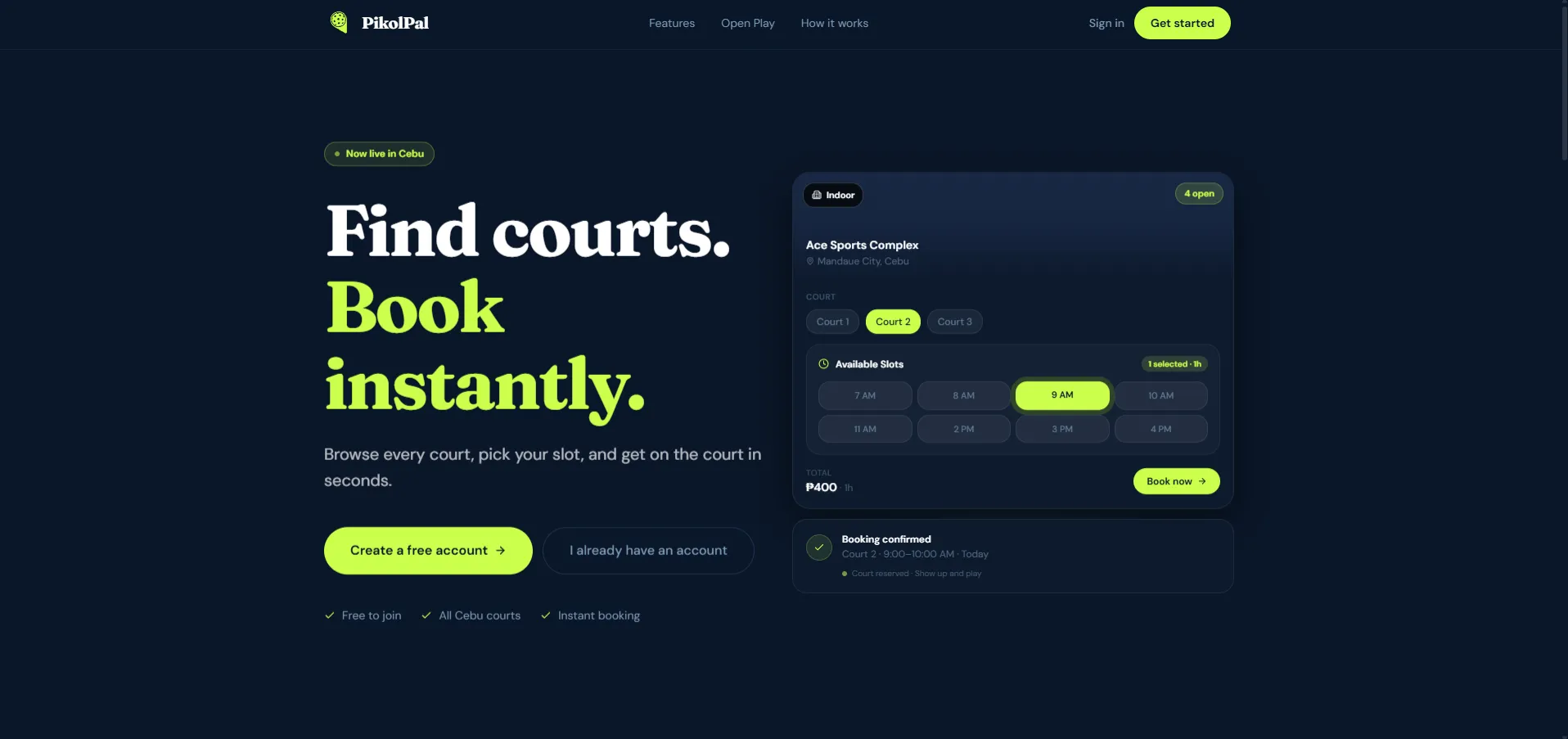
The web app is live at web.pikolpal.com. Players in Cebu can browse courts on an interactive map, view real-time availability, and book a slot instantly. Court owners have a full dashboard to manage listings, control schedules, and monitor booking trends. The mobile app is in active development.
We are proud of what was built, but more than the product itself, we are proud of the process. A clear problem, a scoped solution, a fast ship, and a commitment to iterating based on real feedback. That is how good software gets made.
What This Means for You
PikolPal is a product we built and own, but it is also a demonstration of how we approach client projects at Redan Technologies. If you have a validated business problem and need a technical team that can move from concept to live product without wasted cycles, that is exactly what we do.
If you are a court owner in Cebu and want to get listed on PikolPal, reach out directly. If you are a founder sitting on an idea that needs to be built, let's talk about how we can ship it.
Ready to build something?
hello@redantech.com→